Bob Frankston
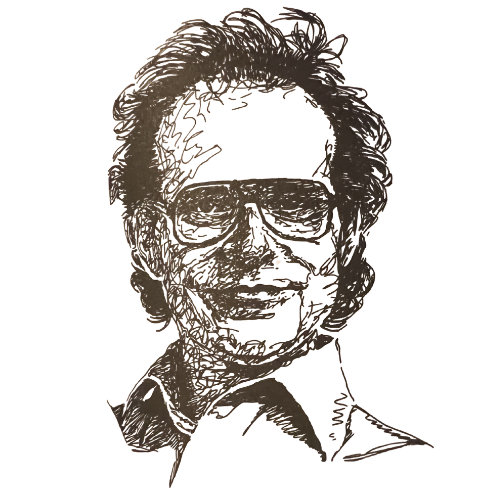
Bob Frankston is as amusing, contrarian, and thought-provoking today as he was when I first talked to him in 1985 for the book. An IEEE Fellow, an honoree of The Computer History Museum, A Fellow of the Association for Computer Machinery, he (and Dan Bricklin) were honored for the invention of VisiCalc, a new metaphor for data manipulation that galvanized the personal computing industry. Today it has been affectionately dubbed “The first Killer app.”
Excerpts from the 1985 Interview in the Book
“The new Lotus office building is on Cambridge Street in Cambridge, right across the Charles River from Boston. On the day I was there, it was pouring rain, and the recently installed glass roof covering the three-story, open lobby was leaking in several places.
A short man with longish brown hair, dark-rimmed glasses, and carrying an umbrella entered the lobby doors. It was Frankston. Out of breath and soaking wet, he came up to me, and we shook hands. We took the elevator up to his new office, which he had yet to move into. We walked through a large open room sectioned into cubicles. I noticed there were many vacant offices and wondered if it was because there were more offices than people or if most of the people just hadn’t moved in yet. Frankston’s large office was situated in a corner of the building along a wall that faces out over the river. It was furnished with two large wooden desks and one round table but no chairs, so Frankston grabbed two chairs from a nearby conference room. Then he dashed out again and came back with two hot cups of coffee. He sat down and pulled a wilted white paper bag out of his pocket. From this a fresh corn muffin appeared which he shared with me as we began our discussion.
From the way Frankston talked and moved about, I gathered he is a man in a constantly busy state. A quick, sharp talker, he spoke rapidly, his thoughts flowing in jerks and starts. Though tight-lipped, quick-witted, and lively, there was a seriousness of purpose about Bob Frankston. He considers himself a creator in the engineering sense but he also struck me as a teacher, always trying to explain things in relation to the listener. As we talked, it seemed he threw as many questions at me as I could throw at him.”
“INTERVIEWER: Do you think computers will continue to be used in the same way they are used today?
FRANKSTON: No. Basically, I think they will disappear. Computers will become intelligence agents or appliances. Personal computers are going to fade into the woodwork. There’s going to be a gradual change. For a while there’ll be a lot of computing dedicated to a person with a PC, but that is by no means the ultimate evolution. People can’t tell where the computing gets done now anyway, and who wants this huge box in the middle of your desk?
INTERVIEWER: So what’s going to happen to software when computers become easier to use as a result of this change?
FRANKSTON: You will always need more and more software, but what you’ve got to do is make programs easier to write, which will make most programmers obsolete. Non-programmers are already programming. VisiCalc, as a programming language, is an example of that. Anybody who can master a telephone can certainly program.
INTERVIEWER: If you would compare programming to an art form, would you compare it to writing, sculpting, painting, or composing music?
FRANKSTON: In music, and in various forms of art, we are trying to operate within rules, but we also go beyond them in a few respects. There are a lot of rules in music, and you have to know when to break the rules and when to follow the rules, just as in programming. You can teach writers to work from an outline, if that helps to organize them. In programming there are a lot of organizational techniques that can be taught. If you’re a sculptor, you’d better know about the center of gravity or at least have a gratuitous sense of it, otherwise you might kill somebody when your art topples over!
In art, you also ask yourself how people will perceive your work. You are trying to establish a certain perceptual impression. I think a lot of artists look at subjects very differently, as do a lot of programmers. When you communicate, whether it be in writing or programming, what you say has to be understood by your recipients. If you cannot explain a program to yourself, the chance of the computer getting it right is pretty small.
INTERVIEWER: What would be your advice to young programmers?
FRANKSTON: Basically, don’t assume you know all that much, and try to learn and question the assumptions. Have a lot of confidence, but stay modest and assume you’re doing something wrong. Get just enough guilt—not too much or you’ll be afraid to do anything—but enough to develop an aesthetic sense. Try to develop a deeper understanding. Don’t assume that just because you can get something to work once, there’s nothing more to understand. I think one of the problems right now with computers is you can get something to work in BASIC, and then you assume you understand when, in fact, you have just started.
INTERVIEWER: What do you think about artificial intelligence?
FRANKSTON: The problem is that the expression “AI” is being hyped a lot these days. Anytime you understand what’s going on, you tend to be reluctant to use the word intelligence. Many commercial expert systems are simply decision tables that are too large to easily solve. There is nothing mystical about it. I tend to view AI as more interesting for understanding cognition and thinking in general systems…It’s fair to say that much of what’s done today in computing is derived from the quest for AI.”