Jaron Lanier
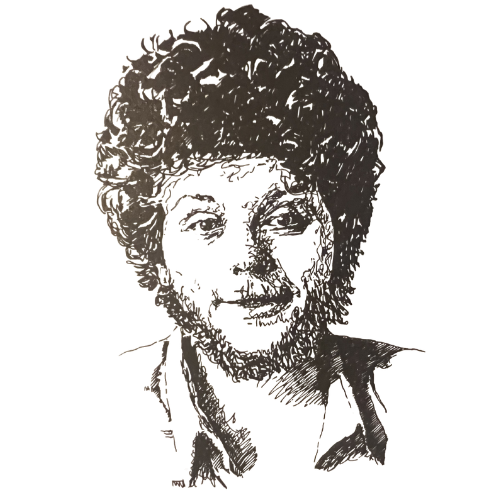
Jaron Lanier was 25 when I first met with him in 1985. Back then, he had recently left Atari to start VPL (Virtual Programming Languages) Research, a company focused on the invention of virtual reality. That was the first chapter in a long story of contributions to the field of thought around the advancement of technology in our everyday human world. He has gone on to become an established “futurist” and world renowned influential intellectual. He also is an accomplished musician and composer. The author of many books mostly on the philosophy and economics of technology, he has worked for Microsoft Research since 2006. He serves in the office of the Chief Technical Officer with a current title of “Chief Unifying Scientist”. He is sometimes referred to as “Microsoft’s Octopus” in reference to his fascination with cephalopod neurology.
My interview with Jaron was mind-bending in 1985 and left me scratching my head to try to understand what he saw. Now re-reading our conversation in light of AI coding capabilities, it all makes sense. The excerpts that follow give you just a glimpse of Jaron’s brilliance and wide-ranging mind. I am not sure he thought it would take this long to see his vision happen but the future has always been notoriously difficult to predict. His full interview in the book captures the early thinking of this brilliant man.
Excerpts from the 1985 Interview in the Book
“Jaron bounded into the room wearing sandals and a short-sleeved royal blue shirt with the collar unbuttoned and the shirttail outside his pants. He was a big, heavy-set young fellow with curly light-brown hair, a beard, and big alert hazel eyes. He smiled widely and greeted me with an excited, animated voice, and then sat down in a chair next to the futon sofa where I sat. After we talked a while, I got the distinct impression Jaron was a free-thinking, unpredictable sort of guy who was always full of ideas and whimsy. When I remarked, gesturing to the instruments, about Jaron’s obvious love of music, he quipped that he was a member of the musical-instrument-of-the-week club.
Throughout the interview, Jaron seemed to instill the computer with a mystery and an offbeat future that most people within the industry had not envisioned. He posed the question, ‘What if the computer affected your reality and the way you perceive things?’”
“INTERVIEWER: Where did you get the inspiration to create this particular VPL programming language?
LANIER: When I was doing video games, I realized programs could be a lot of things. They could be forms of expression, teaching tools—many things. And I thought that ordinary people should be able to make them, that hackers shouldn’t have the exclusive ability to write programs. People should be able to speak and breathe programs just like they talk now. Making little worlds inside the computer should be as easy as saying hello to your friends in the morning. I really believe we’re going to get to that point, and that it will be a very profound type of communication.
INTERVIEWER: Do you mean people will be able to communicate through programs in the future?
LANIER: Sure. Imagine we’re cave people, and someone comes along and somehow communicates to us that there’s this thing called language that we can speak. And you ask him, “What’s that for?” We’re in a similar situation today. Now we use symbols, called words, that when spoken invoke meanings in our minds. But what is more interesting to me is that you can actually build full models of concepts instead of just giving them names. For example, we can say “solar system” and we can say “planets go around,” and we can describe it. But with a computer you can actually build one, an actual simulation of the concept you’re talking about. I think this capacity to make models, as opposed to just giving concepts names, will be the most worthwhile contribution computers will make for humanity. It will eventually allow people to really communicate ideas they can barely communicate now…
See, what I’m doing goes way back to the fifties. I’m going back and taking a fork in the road that everyone passed by. Everyone in programming today is talking about different ways of telling the computer what to do. My programming language doesn’t do that. With mine, you actually look at what the program is doing and you mess with it until it’s right. It’s really a different process. For example, you have a recipe, which a person follows to make a cake or something. That’s what current programming is like. On the other hand, there’s tuning your car’s engine. You watch the thing running and see what it does and change it until it works the way you want it to. My programming language is more like the latter.
INTERVIEWER: Do you ever apply your background in composing music to developing your programming language?
LANIER: A lot of people who are into computers and math are also into music. Music is similar to programming languages in that it has a fairly elaborate kind of notation, music notation. But even more, it’s the musical instruments themselves that are a lot like what I am trying to do. Because, with my language, you interact with a program while it’s running instead of specifying in advance what it should do and then hoping it will run right. It’s more like playing a musical instrument rather than looking at a piece of music
INTERVIEWER: Do you consider programming an art, or a science, or a skill, or a trade?
LANIER: Well, computers don’t have any quality in themselves. They’re absolutely empty things, tabula rasa. Since they are such empty minds, it depends entirely on the person involved, more so than in any other field of human endeavor.”