Michael Hawley
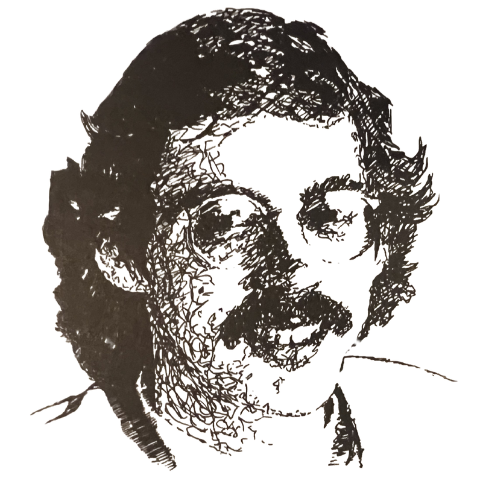
Michael Hawley (November 18,1961-June 24, 2020) was the youngest programmer I interviewed for the book in 1985. At age 24, he was plowing new ground as he dove into how to bring music, visuals, and film into the digital software world.
In our conversation I felt like I was sitting with a modern Mozart in bike shorts, an energetic young creative thinker with a piano keyboard by his side, endless exuberance and a wide range of stories and knowledge. The remarkable life he went on to live evokes sincere admiration.
Whether as a Van Cliburn pianist, an adventurer, a technologist or leader at MIT all stand as testament to his contributions. In his role as Chair of MIT’s Media Laboratory, he planted seeds in the minds of his students that will go on to shape our world for decades. He said in his work he “sought to creatively stretch digital infrastructures, embedding intelligence into all sorts of artifacts and advancing the web of communications.”
The interview in Programmers at Work is a first-hand adventure with the young Michael Hawley through his own words and the ideas he held about how to think about and change the world for the better.
Excerpts from the 1985 Interview in the Book
“A film crew with lights, cameras, and sound equipment milled about the grounds as I approached the building where the offices of The Droid Works part of Lucasfilm were located. This was my first indication that The Droid Works was actually more a part of the movie-entertainment industry than of the traditional software and computer industry.
Michael Hawley led me into the office he shares with another programmer. He had blondish-brown, tousled hair and a dark moustache, and he was wearing a bicycle racing outfit and wire-rimmed, blue-tinted sunglasses. In Hawley’s half of the room, he had arranged his synthesizer, amplifier, and speakers adjacent to his computer terminal and keyboard. In this somewhat overcrowded and cluttered environment, Hawley goes about his work and his passion, composing music and creating computer programs that manipulate and edit music, sound tracks, and film. At several points during the interview, Hawley turned to his keyboard to play a piece he had composed or to demonstrate how the software he has developed can be used to manipulate sounds and create music. His mission, I gathered, is to master the tools of computers and software so that he can apply them to music, the arts, and other media.”
“HAWLEY: …We left the conference early and flew a small plane to a remote island…We hiked through dense coastal rain forest over rotting boardwalk trails for about two miles. It was just like the first scene from Raiders of the Lost Ark, with the moss hanging down and the sunlight filtering through. Finally we arrived at the hot springs, which were simply beautiful. Hot water bubbled up out of the ground and trickled down about two hundred yards, where it went into the ocean. Along the way, the water flowed over a waterfall about ten feet high. If you stood underneath, you got a really nice hot shower. From there, it flowed through a succession of little pools between the rocks, each one big enough to hold three or four people comfortably. The rocks were covered with soft, slimy moss. Each pool was a little bit cooler than the previous one, so you could find any temperature you wanted, from the coolness of the ocean to as hot as you could stand it. Down at the bottom of this area you could sit in the pool and have hot water “jacuzziing” all over your back, and every once in a while a big ocean wave would come rolling in and freeze you, then some more hot water would flow down to warm you up again….
INTERVIEWER: Uh, how does this relate to computers and programming?
HAWLEY: The point was more than to just go to the computer-music conference and suck up the technology; how you get there can be just as interesting and just as important. You shouldn’t waste opportunities when they arrive. It’s the same thing in programming. You uncover lots of stones along the way. New doors and unexpected passageways open up as you develop a program. Workstations and personal computers are kind of like small planes: There are discoveries just waiting to be made if people steer them in the right direction (and get lucky).”
Excerpt 1:
“INTERVIEWER: And where did you grow up?
HAWLEY: Yes, I grew up in New Providence, a little suburb of New York, with no movie theater, no bars. But Bell Labs was up there on the hill, and I got a job working in the linguistics department there doing some computer stuff when I was fifteen or sixteen, just old enough to get working papers. I picked up on the computer projects—there was some pretty neat research going on there. One fellow had built a digital synthesizer, which was particularly fun to play with. From high school through college, various other people at Bell Labs picked me up, saying, “Here, why don’t you try this for a while,” and I would. For a couple years (off and on) I worked in a cognitive psychology group doing really interesting, basic research into problems of communication, especially between people and computers. Psychologists are particularly excited about computers, because it’s like having a big lens you can use to zoom in and see what’s going on in people’s minds.
INTERVIEWER: In what way does a computer help psychologists look into people’s minds?
HAWLEY: As soon as you put a computer in the middle of a communications process, the information gets squeezed through a tight little channel, and you can use the computer to count, massage, and simply observe the information in new ways. Computers constrain users, and force designers to think deeply about what people really want to do with an application, and about how tasks are best presented. They help us focus on communications problems and force us to appreciate the psychological boundaries in ways we couldn’t before. As a new experimental tool, the computer is highly valued. New discoveries require new tools.”
Excerpt 2:
“INTERVIEWER: What do you like about computers and programming?
HAWLEY: I’m still trying to figure that out. I wrote forty thousand lines of code last year. After many frustrating years, one does get weary of writing grungy computer programs. What I like about programming, though, is that it really helps you think about how we communicate, how we think, how logic works, how creative arts work. Computers are communication and information tools, and communication is a beautiful thing. It’s why telephones and personal computers were such an instant hit. The computer is probably the ultimate tool for looking at the problem of communication. I think often great new ideas come from recombining old ideas in new ways...I like the idea of combining music and computers, because music seems an especially rich medium. Music also seems close to emotions and feelings. I think you can compute a lot less and produce more emotional response with music than with pictures. Persuading a computer to perform music in real time is difficult.
INTERVIEWER: Do you see any problems with computers?
HAWLEY: Well, mainly just the “generic” problem, the same problem that plagues all new technology, which is that people think they’re getting something for nothing. Marketers tout computers as being timesavers, claiming life is going to be so much easier after you have your computer. A seductive line, but it’s not really to the point. I wouldn’t begin to suggest that having Alice in Wonderland whiz by on my screen here is any replacement for sitting in front of a fireplace with a nicely bound copy of the book and looking out over a flowery cloister in England somewhere. That’s not what computers are for, and it hurts me to see highly evolved older technologies cast off as people jump to get on this bandwagon. That’s a big problem.
…There’s a big risk of making shallow use of computer technology without fully appreciating what’s behind it and where it came from, but I have a fair amount of faith that people will do more or less the right thing. Sometimes it’s scary.”