Jonathan Sachs
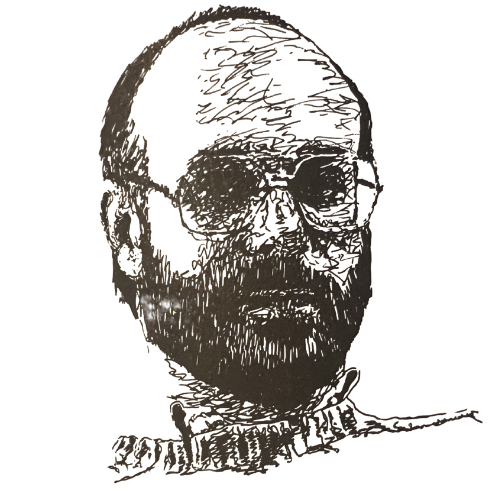
Born in 1947, Jonathan Sachs grew up on the east coast, in New England. He earned his bachelor’s degree in mathematics at MIT. Sachs spent a total of fourteen years both studying and working at MIT. His experiences there as a programmer were wide ranging: He worked for the Center for Space Research, the Cognitive Information Processing group, and the Biomedical Engineering Center. Sachs developed the STOIC programming language while he was working for the Biomedical Engineering Center. In the mid-seventies, Sachs left MIT to work at Data General, where he supervised the development of an operating system. Next, he co-founded Concentric Data Systems, a company that is known for its database products. Jonathan Sachs is credited with writing the phenomenally successful Lotus 1-2-3 spreadsheet program. In 1981, Sachs teamed up with Mitch Kapor to develop and promote Sachs spreadsheet program, and in April 1982, Lotus Development Corporation was formed, with eight employees. On January 26, 1983, Lotus began shipment of 1-2-3 for the IBM PC. By April 26 of the same year, 1-2-3 topped the Softsel best-seller list for the first time and stayed there.. In 1983, Sachs left Lotus to form his own company.
These days, Sachs passion for photography animates his life, so many years since I walked into his spare office in 1985 and was spellbound by the Ansel Adams prints hung on the walls. When I caught up with Jonathan Sachs recently, he was just back from another trip no doubt capturing scenes of his travel. In addition to the art of photography which he has practiced for most of his life, he also has developed “serious software for serious photographers” at his company Digital Light & Color.
Excerpts from the 1985 Interview in the Book
“Through the pouring autumn rain I made my way to the western edge of Cambridge where Jonathan Sachs had told me we were to meet. After some searching through the designated office complex, I found myself in front of a door with a simple plaque that read “Jonathan Sachs and Associates.” I had expected something more grand. I knocked and entered a large one-room office. Jazz music played in the background. On the clean white walls hung several prints by Ansel Adams. A tall, slightly greying, bearded man dressed in a wool sweater and corduroy jeans got up from his computer terminal to greet me in a soft-spoken voice. This was Sachs, the man who developed Lotus 1-2-3. I took a seat in a leather lounge chair as Jonathan turned off his IBM AT and swiveled his chair around to talk.”
“INTERVIEWER: Tell me about how you came to develop Lotus 1-2-3?
SACHS: …Later I formed a small consulting company with a partner. One of our problems was that two technical people shouldn’t try to run a company. We argued over technical issues when we should have been marketing. So we parted ways, and I took the rights to develop another spreadsheet based on the old one. Then I took the spreadsheet to Mitch Kapor, who had demonstrated some marketing success. He had sold Visi-Plot and VisiTrend personal software and was getting royalties. He knew what needed to be done, and I knew how to do it. Our business relationship worked out fairly well.
INTERVIEWER: At that point did you have just the idea or was the program already done?
SACHS: The spreadsheet was already done, and within a month, I had converted it over to C. Then it started evolving from that point on, a little at a time. In fact, the original idea was very different from what ended up as the final version…The development of 1-2-3 was ten months of nothing but eating, sleeping, and working.
INTERVIEWER: Is it easier for you to write programs now than it was fifteen years ago?
SACHS: Programming doesn’t seem to have changed that much in the past fifteen years. Once you get to a certain level of experience, you go from the idea to the program without even thinking about all the intermediate steps; the process becomes automatic.
INTERVIEWER: What makes a person a good programmer? Is talent or training the key?
SACHS: It’s a combination of talent, temperament, motivation, and hard work. I find quite a lot of people expect to be really good after a short time, but I haven’t known too many people who have been successful in doing that. Success comes from doing the same thing over and over again; each time you learn a little bit and you do it a little better the next time. I was extremely fortunate to have a lot of interesting jobs that covered a broad spectrum at the beginning of my career. It’s much harder these days for people starting out to get a wide range of experience, because the jobs are already subdivided. People tend to specialize fairly early. I’m not a particularly creative person; my real skill is taking ideas and integrating them to make a nice package.
I’ve found that almost all programming is surprisingly similar. There are a few basic algorithms, and loops and conditionals, but everything comes down to the same process in the end… All these decisions seem as if they were the result of careful market research, but they weren’t. The methodology we used to develop 1-2-3 had a lot to do with the success of the product. For instance, 1-2-3 began with a working program, and it continued to be a working program throughout its development. I was working largely in isolation at the time. I had an office in Hopkinton, where I lived at the time, and I came to the office about once a week and brought in a new version. I fixed any bugs immediately in the next version. Also, people at Lotus were using the program continuously. This was the exact opposite of the standard method for developing a big program, where you spend a lot of time and work up a functional spec, do a modular decomposition, give each piece to a bunch of people, and integrate the pieces when they’re all done. The problem with that method is you don’t get a working program until the very end. If you know exactly what you want to do, that method is fine. But when you’re doing something new, all kinds of problems crop up that you just don’t anticipate…
INTERVIEWER: How do you perceive computers? Are they just machines, and just giant calculators?
SACHS: Certainly they’re tools. That’s what I say objectively. But they’re also toys; they’re fun. You can interact with a computer. And if you do it just right, you can make wonderful things happen.”